
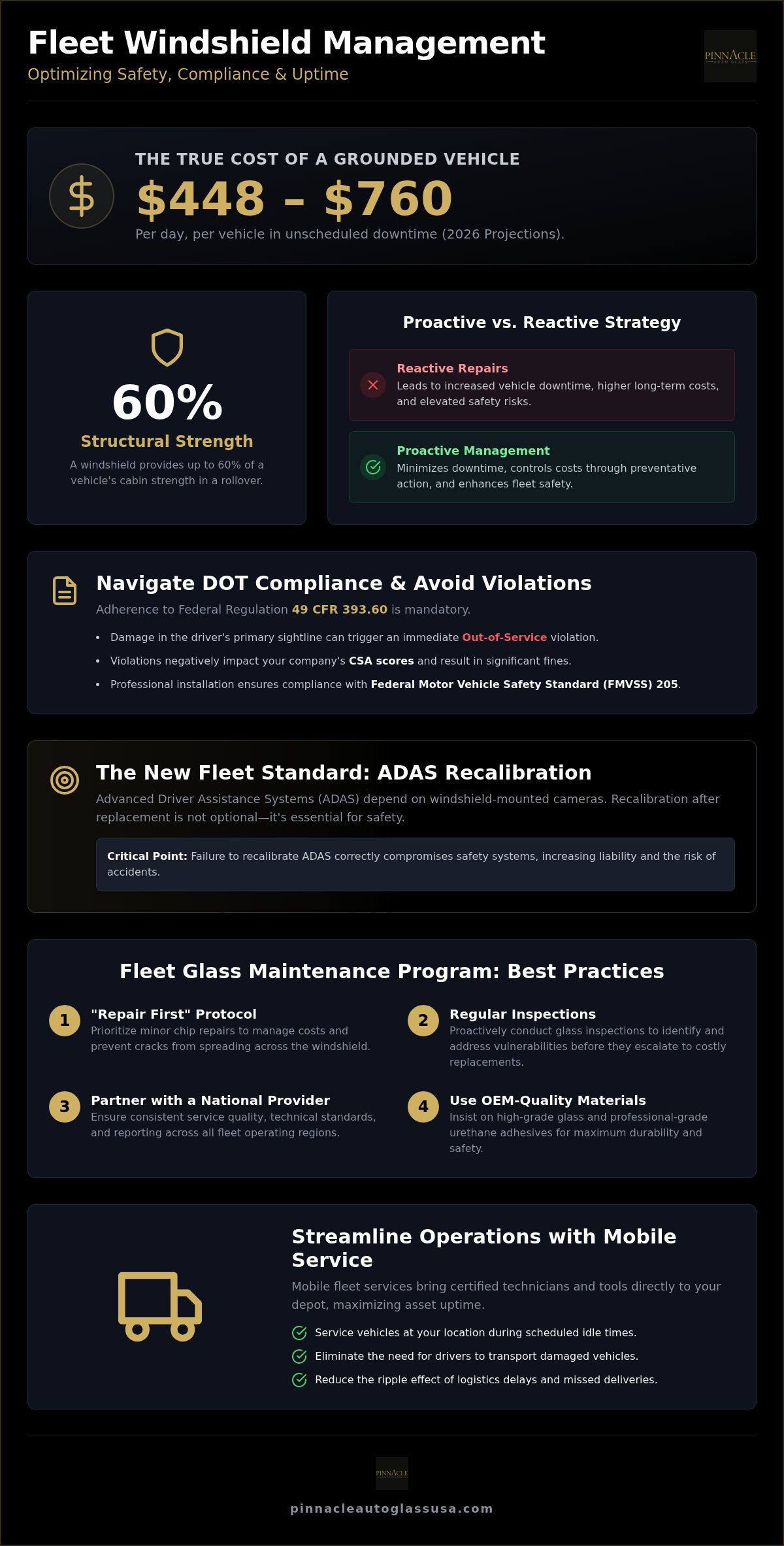
A single day of unscheduled vehicle downtime in 2026 costs a company between $448 and $760 per vehicle. For fleet managers, a cracked windshield is more than a minor nuisance; it's a direct hit to your bottom line and a potential safety violation. Finding a reliable partner for fleet windshield replacement across multiple regions often feels like a logistical nightmare. You need speed, consistency, and technical expertise to keep your drivers safe and your assets on the move.
We understand that managing glass for a national fleet requires more than just a quick fix. Modern vehicles rely on complex safety systems that demand precision. This guide provides a clear roadmap for optimizing your glass management strategy. You'll learn how to handle advanced ADAS recalibration, ensure full DOT compliance, and select a service partner with the national reach your business requires. We focus on practical solutions that reduce turnaround times and keep your fleet fully operational.
Key Takeaways
- Learn how to minimize vehicle downtime by switching from reactive repairs to a proactive fleet windshield replacement strategy.
- Understand why integrated ADAS recalibration is mandatory for modern fleet safety and how to ensure your provider meets these technical standards.
- Evaluate the logistical benefits of mobile fleet services to streamline operations and eliminate the need for drivers to transport vehicles.
- Identify current DOT regulations for windshield damage to prevent costly out-of-service violations and maintain high safety standards.
- Implement a "repair first" protocol for minor chips to manage costs effectively without compromising the vehicle's structural integrity.
Maximizing Efficiency with Professional Fleet Windshield Replacement
Professional fleet windshield replacement is a proactive strategy designed to maintain glass integrity across your entire inventory of commercial vehicles. This approach goes beyond reactive repairs. It focuses on identifying vulnerabilities before they cause operational failure. For fleet managers, glass management is a core component of asset protection. You aren't just fixing a crack; you're securing a critical safety barrier that protects your drivers and your cargo.
Fleet-specific services differ significantly from standard consumer auto glass repair. While a consumer might prioritize price or local proximity, a fleet manager requires scale, technical consistency, and integrated reporting. You need a partner who understands the specific glass requirements of semi-trucks and delivery vans. Standard consumer shops often lack the specialized inventory or the mobile capacity to handle multiple heavy-duty installations at a single depot. Consistency across different regions is vital for maintaining your safety standards.
Glass condition directly influences your safety ratings and structural integrity. Modern windshields are composed of laminated safety glass, which provides up to 60% of the cabin's structural strength during a rollover accident. A small crack isn't just a cosmetic issue. It's a structural failure. Maintaining pristine glass ensures that the vehicle’s frame can withstand the stresses of daily fleet operations and protect the occupant in a collision.
The True Cost of Fleet Downtime
Every hour a vehicle sits idle is an hour it doesn't generate revenue. In 2026, a single day of vehicle downtime costs a company between $448 and $760. This loss compounds quickly across a large fleet. Reducing fleet downtime with mobile glass repair is a strategic necessity. It allows technicians to service vehicles at your location during scheduled idle times. This prevents the ripple effect of delayed logistics and missed delivery windows. Efficiency is the priority.
Safety Compliance and Liability Management
Compliance is a legal requirement, not a suggestion. Federal regulation 49 CFR 393.60 specifies that commercial motor vehicles with windshield damage in the driver's primary sightline can be placed out-of-service. These violations lead to immediate fines and impact your CSA scores. Ensuring every windshield replacement follows Federal Motor Vehicle Safety Standard (FMVSS) 205 protects your business from liability. Certified installations provide a documented trail of safety compliance. It shows you've met federal standards. Professional service mitigates risk and keeps your fleet on the road legally.
Technical Requirements for Commercial and Heavy-Duty Glass
Commercial vehicle glass must endure extreme conditions that standard passenger car windshields never face. Long-haul semi-trucks, box trucks, and delivery vans each have specific glass requirements. These are dictated by their chassis design and operational environment. For instance, a semi-truck windshield often consists of two large, flat panels. In contrast, a modern delivery van might feature a curved, aerodynamic wrap-around design. Regardless of the shape, every fleet windshield replacement must adhere to the Federal Motor Vehicle Safety Standard 205. This ensures the glass provides the necessary optical clarity and impact resistance required for commercial use.
Using OEM-quality glass is a strategic choice for heavy-duty vehicle durability. High-quality glass resists pitting and sand-blasting from road debris better than budget alternatives. It's a vital consideration for logistics fleets that log hundreds of thousands of miles annually. Additionally, the role of high-quality adhesives shouldn't be overlooked. A commercial vehicle's structural integrity depends on the bond between the glass and the frame. Professional-grade urethanes ensure that the windshield stays securely in place. This remains true even during the heavy vibrations and frame twisting common in large-scale logistics operations.
ADAS Recalibration: The New Fleet Standard
Most modern commercial vehicles now come equipped with Advanced Driver Assistance Systems (ADAS). These systems rely on cameras and sensors typically mounted behind the windshield. Because of this, ADAS calibration auto glass services are now a mandatory part of the replacement process. ADAS recalibration is the process of aligning vehicle sensors with new glass. Without this step, lane departure warnings and forward collision systems may fail or provide false alerts. Ensuring these systems function correctly is vital for maintaining driver safety and reducing insurance risks.
Managing Large-Scale Glass Inventory
Speed is the most important factor in fleet windshield replacement. A service provider that doesn't stock heavy-duty glass for common models will inevitably cause delays. We maintain an extensive inventory for popular commercial platforms, including Freightliner, Kenworth, and Ford Transit models. This readiness eliminates the wait for specialized parts to ship from across the country. For fleets with unique or specialized commercial equipment, we provide custom glass solutions that meet the same rigorous safety standards as standard components. If you need to secure your fleet's operational uptime, partner with a team that understands commercial truck glass technical requirements.
Strategic Deployment: Mobile vs. In-Shop Fleet Services
Deciding where to perform a fleet windshield replacement depends on your operational layout and the technical needs of your vehicles. Mobile service offers unmatched convenience for high-volume logistics hubs. In-shop service provides the controlled environment necessary for specific technical procedures. A balanced strategy uses both models to minimize downtime while ensuring full safety compliance across your entire geographic footprint.
Efficiency in a high-volume fleet environment requires a partner who can balance speed with precision. You don't want your vehicles sitting idle while waiting for a shop appointment. Conversely, you can't compromise on the quality of the installation. Professional glass management involves evaluating each vehicle's needs to determine the most effective service path. This strategic approach keeps your logistics schedules on track and your drivers focused on the road.
Benefits of On-Site Mobile Replacement
Mobile fleet services eliminate the logistical burden of transporting vehicles to a third-party facility. Technicians arrive at your distribution center or dispatch yard to complete repairs. This model offers several operational advantages:
- Off-Hour Servicing: Schedule replacements during vehicle downtime to prevent route disruptions.
- Labor Savings: Eliminate the driver labor hours associated with transporting vehicles and waiting at a shop.
- Fuel Efficiency: Reduce fuel costs by keeping your heavy-duty assets at their home base.
- Regulatory Compliance: Meet OSHA regulations on vehicle maintenance by addressing glass damage immediately at your facility.
When to Opt for In-Shop Recalibration
While mobile service is highly efficient, certain scenarios require an in-shop approach. Static ADAS recalibration often requires a perfectly level floor and specific lighting conditions that a standard parking lot cannot provide. These technical environments are essential for aligning sensors with surgical precision. Climate-controlled shops also ensure that high-performance adhesives cure correctly during extreme weather conditions. If a vehicle has complex glass issues or requires specialized shop tools, an in-shop visit is the safer choice for long-term durability. We help you identify which vehicles in your fleet windshield replacement program require these specialized shop conditions to maintain full safety compliance.
Best Practices for a Fleet Glass Maintenance Program
Successful fleet management relies on a standardized reporting system. You must empower your drivers to flag glass damage the moment it occurs. Small chips often escalate into full cracks within 48 hours due to road vibrations and temperature changes. A clear protocol for reporting ensures that minor issues don't turn into a mandatory fleet windshield replacement. Training your team to identify and document damage during pre-trip inspections is the first line of defense against operational delays.
Adopting a "Repair First" philosophy is the smartest financial move for any logistics operation. Industry data shows that a windshield chip reported within 48 hours is almost always repairable. We recommend repairing any damage smaller than a quarter immediately. Choosing windshield repair over a full replacement saves significant capital and keeps the original factory seal intact. It's a faster process that minimizes the time a vehicle spends in the shop.
You should also develop a priority system based on damage severity and the vehicle's specific mission. A crack in the driver's primary sightline on a long-haul semi-truck requires immediate attention to avoid DOT violations. Conversely, a minor chip on a backup vehicle might be scheduled for a mobile visit during its next service window. Training drivers on these risks is essential. They need to understand that compromised glass affects the vehicle's structural integrity and their own safety on the road.
Streamlining Insurance and Billing
Managing invoices for dozens of vehicles can overwhelm an accounting department. We offer centralized billing to simplify the process for large-scale fleets. Our team understands the nuances of commercial insurance claims and works directly with your provider to handle the paperwork. Centralized billing reduces administrative overhead by consolidating all glass-related expenses into a single, manageable stream. If you want to simplify your operations, you should partner with a fleet glass expert who prioritizes administrative efficiency.
Regular Glass Audits and Inspections
Incorporate glass checks into your standard maintenance schedule to catch issues early. These audits help you identify "hot spots" in your routes where gravel or debris frequently causes damage. By tracking this data, you can adjust routes or implement protective measures to reduce your fleet windshield replacement frequency. This data-driven approach also helps you accurately predict and budget for your annual windshield replacement cost. Proactive inspections turn glass maintenance from an emergency expense into a predictable operational line item.
Comprehensive Fleet Solutions with Pinnacle Auto Glass
Pinnacle Auto Glass acts as a strategic partner for businesses requiring reliable fleet windshield replacement. We don't just replace glass; we manage your fleet's safety and operational readiness. Our commitment to high-quality materials ensures that your heavy-duty vehicles remain durable under operational stress. We integrate professional ADAS recalibration into our workflow to maintain the integrity of your safety systems. This unified approach eliminates the need for multiple service appointments and reduces technical errors.
We possess specialized expertise in commercial truck glass for semi-trucks, box trucks, and delivery vans. Our technicians understand the unique mounting requirements and structural demands of large-scale logistics vehicles. We prioritize a partnership approach focused on your fleet's long-term uptime. By choosing a provider with national capabilities, you ensure that every vehicle in your inventory meets the same high standard of safety and performance. We focus on results and precision to keep your assets moving.
Scalable Support for Every Fleet Size
Our infrastructure scales to meet the demands of any business. We provide consistent service quality whether you manage a small local delivery team or a national long-haul carrier. You'll receive professional attention and technical precision regardless of your vehicle's location. We maintain a nationwide service scope that allows us to support your operations across different regions without sacrificing quality or consistency. Our goal is to simplify your maintenance logistics.
- Small Local Fleets: Personalized service for local delivery and service vehicles.
- National Carriers: Scalable solutions for long-haul logistics and nationwide distribution networks.
- Dedicated Management: High-volume partners receive dedicated account management to streamline scheduling and reporting.
Ready to Secure Your Fleet?
Establishing a professional fleet windshield replacement program is the best way to protect your drivers and your bottom line. We make the transition easy. Our team starts with a professional glass assessment to identify immediate needs and potential vulnerabilities in your fleet. We then develop a customized fleet service plan tailored to your specific routes and vehicle types. This proactive strategy ensures that your glass management is organized, predictable, and efficient.
Don't wait for a safety violation or a cracked windshield to disrupt your schedule. Contact our team today to discuss your requirements and receive a customized service proposal. We're ready to help you maintain your operational momentum and safety compliance. Partner with Pinnacle Auto Glass for your fleet needs today.
Securing the Future of Your Fleet Operations
Optimizing your fleet's efficiency requires a shift from reactive repairs to a strategic glass management program. By prioritizing a "repair first" philosophy and integrating regular audits, you can significantly reduce the frequency of full fleet windshield replacement. Maintaining strict adherence to DOT standards and ensuring precise ADAS recalibration protects your drivers while mitigating corporate liability. The right service model, whether mobile or in-shop, keeps your logistics schedules on track and your revenue flowing.
Pinnacle Auto Glass is ready to serve as your dependable guide in this complex technical landscape. We offer specialized expertise as heavy-duty commercial specialists with national mobile service capabilities. Our team ensures your safety systems are fully compliant through expert ADAS recalibration tailored for large-scale operations. Don't let glass damage compromise your operational momentum. Streamline your fleet glass maintenance with Pinnacle Auto Glass today. We're here to help you maintain a safe, compliant, and highly efficient fleet for the long term.
Frequently Asked Questions
How quickly can a fleet windshield be replaced to minimize downtime?
Most standard replacements take between 2 to 4 hours to complete. If your vehicle requires ADAS recalibration, the process may take slightly longer to ensure sensor precision. We prioritize rapid turnaround times to return your assets to the road. Mobile technicians can often perform the installation at your facility within two hours of arrival, which eliminates the time lost to vehicle transport.
Does my fleet insurance cover windshield replacement and ADAS recalibration?
Most commercial auto insurance policies cover glass damage, including the technical costs of ADAS recalibration. Many fleet policies include specific endorsements that reduce or eliminate deductibles for glass-only claims. We work directly with your insurance provider to manage the billing and paperwork. This ensures your safety systems are restored to factory standards without creating an administrative burden for your fleet department.
Can semi-truck windshields be replaced on-site via mobile service?
Yes, semi-truck windshields can be replaced on-site through our mobile fleet glass services. Our technicians are equipped to handle the specialized requirements of heavy-duty commercial vehicles at your depot or dispatch yard. This mobile approach is a core part of our strategy for fleet windshield replacement. It allows your drivers to remain focused on their logistics schedules instead of transporting equipment to a shop.
What happens if a fleet vehicle's ADAS is not recalibrated after glass replacement?
Failure to recalibrate ADAS can lead to malfunctioning safety features like lane departure warnings and automatic emergency braking. These sensors rely on precise alignment through the glass to function correctly. Operating a vehicle with uncalibrated sensors increases your corporate liability and puts your drivers at risk. Professional recalibration ensures that these critical safety systems are accurate and fully compliant with manufacturer safety specifications.
Is it better to repair a chip or replace the entire fleet windshield?
We recommend a "repair first" protocol for any chips smaller than a quarter that aren't in the driver's direct line of sight. Repairing a chip is faster and more cost-effective than a full replacement. However, if the damage is larger or located in a critical viewing area, a full fleet windshield replacement is necessary. This maintains the vehicle's structural integrity and meets federal safety requirements.
What are the DOT regulations regarding cracks in commercial vehicle windshields?
Federal regulation 49 CFR 393.60 mandates that commercial vehicles can't have cracks or damage in the driver's primary sightline. Specifically, damage can't exceed 3/4 of an inch in diameter if it's located within the area swept by the wipers. Violating these standards can result in an out-of-service order during a DOT inspection. This leads to immediate fines and costly delays for your logistics operations.
How does professional glass management improve fleet safety scores?
Professional glass management ensures your vehicles consistently meet federal safety standards, which directly impacts your CSA scores. By proactively addressing chips and cracks, you avoid the safety violations that lower your ratings. Additionally, ensuring that ADAS sensors are correctly calibrated reduces the likelihood of accidents. This demonstrates a commitment to safety that can lead to lower insurance premiums and better overall safety records.
Can you handle glass replacement for a diverse fleet of vans and trucks?
We provide comprehensive glass solutions for a wide variety of commercial vehicles, including Ford Transit vans, box trucks, and Class 8 semi-trucks. Our national inventory includes specialized glass for most major commercial manufacturers. This capability allows us to support diverse fleets with a single point of contact. We ensure consistent service quality and technical precision across every vehicle type in your inventory.


