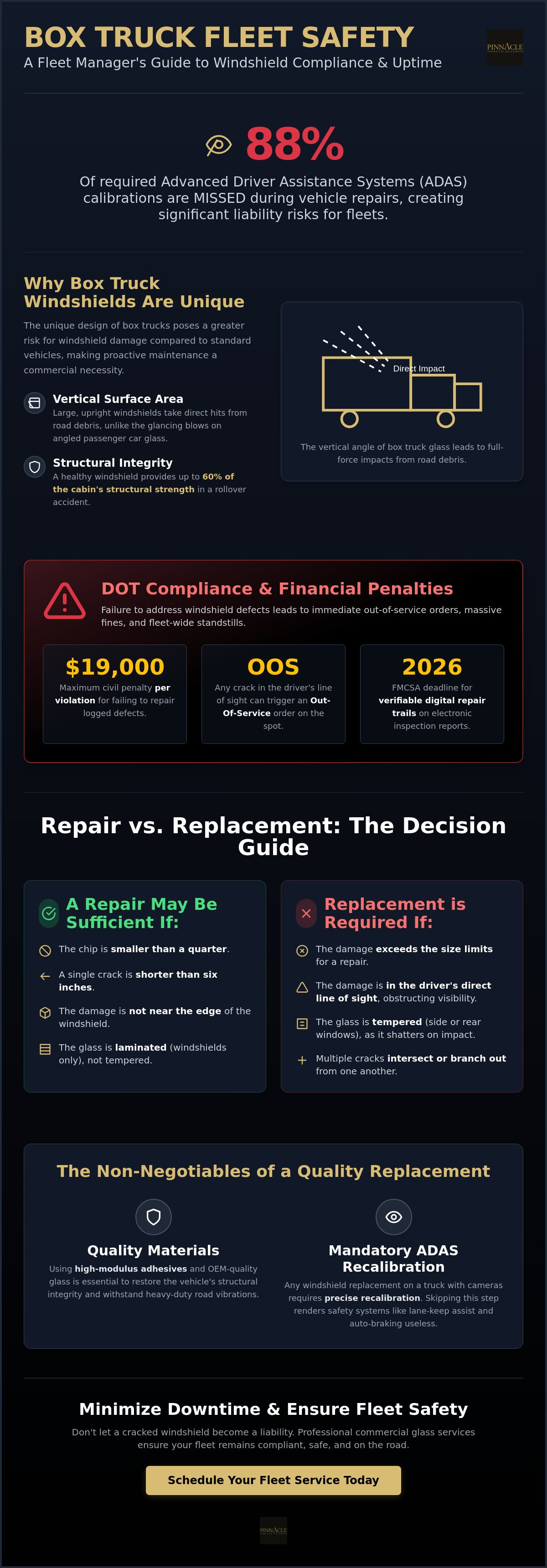
Did you know that 88% of required ADAS calibrations are missed during vehicle repairs? For fleet managers, a cracked windshield is more than a cosmetic issue; it's a major liability and a primary cause for DOT inspection failures. Scheduling a professional box truck windshield replacement is the only way to ensure your safety systems function correctly and your drivers stay protected on the road.
You understand that every hour a vehicle sits idle is an hour of lost revenue. Dealing with glass damage is a constant balancing act between safety and speed. This guide provides the tools you need to manage commercial glass damage, evaluate repair versus replacement options, and ensure your fleet remains compliant with the latest 2026 FMCSA digital trail requirements. We'll cover the critical role of ADAS recalibration, the financial impact of missed safety checks, and how to navigate state-specific laws in New York and California to keep your business moving forward. Maintaining your glass is a strategic uptime investment that keeps your crew safe and your trucks in service.
Key Takeaways
- Understand why the large, vertical surface area of box trucks makes them more susceptible to debris damage compared to standard passenger vehicles.
- Learn the specific industry criteria used to determine when a box truck windshield replacement is required versus when a simple repair is sufficient.
- Discover the importance of using high-modulus adhesives and quality glass to maintain structural integrity under heavy-duty road vibrations.
- Identify how professional recalibration of Advanced Driver Assistance Systems (ADAS) prevents safety malfunctions and liability risks.
- Explore how specialized commercial glass services minimize vehicle downtime and ensure compliance with the latest FMCSA safety standards.
Why Box Truck Windshield Integrity Is a Commercial Necessity
Box trucks, often referred to as straight trucks or cube trucks, feature a unique design where the cargo area and cab are mounted on a single, rigid frame. This configuration creates a distinct challenge for glass maintenance. The windshields are typically larger and more vertical than those found on passenger vehicles. This upright angle means that road debris strikes the glass with full force instead of glancing off at an angle. For fleet owners, proactive box truck windshield replacement is a necessity to keep these vital assets on the move.
Beyond visibility, the windshield is a core safety component. In the event of a rollover accident, the glass can contribute up to 60% of the cabin's structural strength. It supports the roof and ensures that airbags deploy correctly. Because it is made of laminated safety glass, it is designed to hold together even when shattered. However, a compromised windshield cannot provide this level of protection. Partnering with experts for commercial truck windshield replacement ensures that your fleet meets these critical safety benchmarks.
DOT Compliance and Safety Standards
The Department of Transportation (DOT) maintains strict standards for commercial vehicle glass. Any crack or chip that falls within the driver's line of sight, specifically the area swept by the windshield wipers, can trigger an immediate out-of-service (OOS) order. Under the FMCSA regulations effective February 2026, inspectors are applying even more scrutiny to these defects. Electronic Driver Vehicle Inspection Reports (DVIRs) now require a verifiable digital trail. If a defect is logged and not repaired via a closed-loop digital signature process, the vehicle is blocked from dispatch. Failing to address these issues can result in civil penalties reaching up to $19,000 per violation. Wind noise and leaks are also safety concerns, as they can distract drivers and lead to moisture damage in sensitive cab electronics.
The Financial Impact of Obstructed Visibility
Obstructed visibility does more than just fail inspections; it impacts your bottom line. Cracks and pits in the glass catch the light, creating glare that leads to significant driver fatigue during long shifts. What starts as a small chip can quickly escalate into an expensive roadside emergency. High road vibrations in commercial vehicles accelerate the spread of glass damage. Straight truck glass is a critical safety component. Prompt box truck windshield replacement prevents minor damage from turning into a total fleet standstill.
Repair vs. Replacement: Evaluating Box Truck Glass Damage
Deciding whether to repair or replace glass depends on the severity and location of the damage. Box trucks operate under high tension because of their rigid frames and heavy cargo loads. These factors create intense road vibrations that can cause a minor chip to spread across the entire surface in minutes. Fleet managers must understand the difference between the laminated safety glass used in windshields and the tempered glass found in side windows. Only laminated glass can be safely repaired. Tempered glass is designed to shatter into small pieces upon impact, making replacement the only option for side or rear windows.
Compliance is a major factor in this decision. Federal regulations found in 49 CFR Part 393 Subpart D dictate the specific conditions under which a windshield is considered defective. For example, any crack that intersects another crack or any damage that exceeds specific size limits will trigger a violation. If you aren't sure about the current status of your vehicles, reaching out for expert fleet glass services can help you avoid costly fines.
When a Professional Repair Is Sufficient
A repair is often viable if the damage is caught early. Industry standards generally follow the "quarter-size" rule for chips and the "six-inch" rule for cracks. If a chip is smaller than a quarter or a single crack is shorter than six inches, a technician can likely fix it. The location also matters. Damage near the edges of the glass is more likely to spread because that's where the most structural stress occurs. The professional windshield repair process involves injecting a high-grade resin into the damaged area. This resin is then cured with UV light to restore the glass's strength and clarity.
When Full Replacement Is Non-Negotiable
There are several scenarios where a full box truck windshield replacement is the only safe choice. If the damage penetrates both layers of the laminated glass, the structural integrity is gone. Large-format commercial windshields are also prone to "spiderwebbing," where multiple cracks radiate from a single impact point. This type of damage cannot be reliably repaired. Any defect that sits directly in the driver's line of sight must be addressed with a replacement to ensure maximum visibility and safety. When the damage is too deep or too widespread, a professional box truck windshield replacement is the only way to keep your drivers safe and your fleet compliant with DOT standards.
Key Factors Influencing Commercial Glass Replacement Quality
A successful box truck windshield replacement requires more than just a new sheet of glass. It involves a precise combination of high-quality materials, specialized tools, and technical expertise. Because box trucks feature large, vertical cabs, the glass is subject to unique aerodynamic pressures and mechanical stresses. Using substandard materials or rushed installation techniques can lead to premature failure, water leaks, or compromised safety. Fleet managers must prioritize quality components to ensure long-term durability and driver safety.
Handling large-format glass in commercial cabs is a complex labor process. Unlike standard passenger vehicles, box truck windshields are heavy and awkward to maneuver. Professional technicians use specialized suction cups and heavy-duty glass racks to prevent stress fractures during the installation. Accuracy is paramount. Even a slight misalignment can interfere with the seal or the performance of modern safety systems. Adhering to FMCSA windshield condition regulations ensures that every installation meets federal safety standards for commercial operations.
OEM vs. Aftermarket Glass for Box Trucks
Choosing between Original Equipment Manufacturer (OEM) glass and aftermarket options is a common fleet management decision. OEM glass is produced by the same manufacturer that supplied the vehicle's original parts. It offers the best optical clarity and a perfect fit. Aftermarket glass is produced by third-party companies. While often more budget-friendly, quality can vary. Consider these factors when choosing:
- ADAS Performance: Newer box trucks equipped with camera-based safety systems often require OEM glass. Slight variations in aftermarket glass thickness or curvature can distort the camera's view.
- Optical Clarity: High-quality glass reduces distortion and glare. This is critical for preventing driver fatigue during long shifts.
- Vehicle Age: For older trucks without advanced sensors, high-quality aftermarket glass is a cost-effective solution that maintains safety without the premium price tag.
The Importance of Proper Adhesive and Cure Times
Adhesive quality is as vital as the glass itself. In commercial applications, technicians use high-modulus adhesives designed to support the weight of heavy-duty glass. The most critical factor for fleet uptime is the Safe Drive-Away Time (SDAT). This is the minimum time required for the adhesive to cure before the vehicle can be safely operated. Rushing this process is a major risk. If the adhesive hasn't fully bonded, the windshield may shift, leading to persistent leaks or total structural failure during a collision. Proper curing ensures the cab remains airtight and structurally sound, keeping your fleet on the road without repeated shop visits.
Minimizing Fleet Downtime and Ensuring ADAS Safety
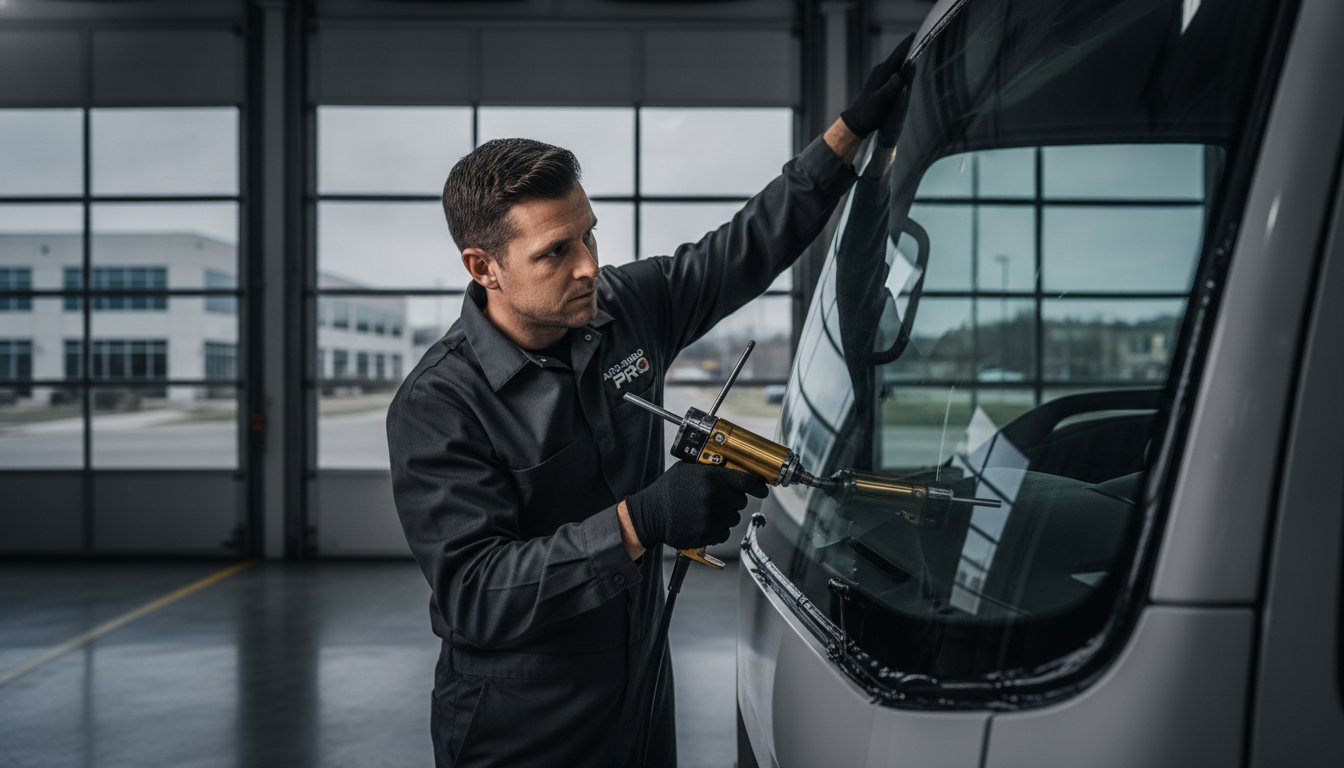
Efficiency is the backbone of logistics. Every hour a vehicle sits in a shop is an hour of lost revenue. By reducing fleet downtime with mobile glass repair, you bypass the logistical headache of transporting heavy vehicles to a service center. Modern box trucks are now sophisticated machines equipped with Advanced Driver Assistance Systems (ADAS). These systems, including automatic emergency braking (AEB), can reduce rear-end crashes by 50% according to IIHS research. However, these safety benefits rely entirely on precise sensor alignment during a box truck windshield replacement.
Managing a mixed fleet requires a coordinated approach. You may need to sync a box truck windshield replacement with other routine maintenance to maximize uptime. Use this checklist to streamline your service:
- Identify which vehicles have camera-based safety systems.
- Ensure the service area has level ground for accurate ADAS target placement.
- Verify that the mobile environment is temperature-controlled for proper adhesive curing.
- Schedule glass restoration during off-peak hours or driver rest periods.
If your fleet includes smaller logistics vehicles, coordinating these services with delivery van windshield replacement ensures all your assets meet the same high safety standards. Contact our team to schedule your fleet glass service and keep your operations moving.
The Critical Role of ADAS Recalibration
Windshield-mounted cameras control lane departure warnings and collision mitigation. Industry research indicates that 88% of required ADAS calibrations are missed during vehicle repairs. This is a massive liability for commercial fleets. Missed calibrations have led to lawsuits with settlements ranging from $200,000 to over $1 million. The ADAS calibration auto glass process restores these sensors to factory specifications. Under the 2026 standards, recalibration is no longer an optional upgrade; it's a mandatory safety requirement for commercial compliance.
Strategic Scheduling for Mobile Services
Mobile glass technicians bring the shop to your yard. This allows you to service vehicles while they are being loaded or during mandatory driver downtime. For a successful mobile installation, the vehicle must be parked on level ground. This is essential for the 2026 recalibration protocols, which use laser-guided targets to reset camera parameters. Technicians also require a dry environment to ensure the high-modulus adhesive bonds correctly to the cab frame. By planning these visits around your vehicle maintenance schedules, you eliminate the need for extra trips to a repair facility and keep your delivery timelines intact.
Professional Glass Solutions for Box Truck Fleets
Partnering with a specialized provider for your box truck windshield replacement needs moves glass maintenance from a reactive chore to a managed strategy. General auto glass shops often lack the heavy-duty equipment or the specific inventory required for large straight trucks. A dedicated commercial partner understands the nuances of various cab configurations and the high-stress environments these vehicles face daily. This expertise ensures that every installation is handled with the precision necessary to maintain the vehicle's structural integrity and long-term reliability. Proper management prevents minor chips from turning into fleet-wide compliance issues.
A comprehensive fleet glass management program offers more than just repairs. It provides a structured approach to vehicle safety and uptime. By centralizing your glass services, you gain better control over maintenance schedules and safety standards. This proactive model allows fleet managers to identify recurring issues and address them before they lead to DOT inspection failures or driver safety risks. Similar to how Warrens Power Washing provides specialized exterior cleaning to preserve property value, investing in professional glass solutions is a commitment to the longevity of your assets and the safety of your crew.
Why Expertise Matters for Commercial Cabs
Installing glass in a box truck is a high-stakes task. The training required for certified auto glass technicians focuses on the specific bond requirements for heavy-duty frames. These professionals use advanced tools and high-modulus adhesives to ensure the glass remains secure under heavy road vibrations. Choosing professional service reduces long-term maintenance costs by preventing common issues like water leaks or air whistles that can damage sensitive interior electronics. Pinnacle Auto Glass serves as a dependable national partner, offering the consistent quality of a large entity with the focused attention of a local provider.
Streamlining the Insurance and Billing Process
Administrative efficiency is just as important as technical skill. Professional providers simplify the paperwork by handling commercial insurance claims directly. This reduces the burden on your office staff and ensures that billing is processed accurately and quickly. A structured fleet management program offers several key advantages for your operation:
- Transparent Pricing: Standardized rates across your entire fleet make budgeting predictable and eliminate hidden fees.
- Priority Scheduling: Dedicated commercial accounts receive faster response times to minimize vehicle downtime.
- Consolidated Billing: Simplified invoicing for multiple vehicles reduces accounting complexity and saves time.
- Compliance Documentation: Detailed repair records help you maintain a clean digital trail for DOT audits and insurance reviews.
Reliable glass restoration is essential for keeping your fleet moving safely. Our team is ready to provide a comprehensive assessment of your vehicles and develop a maintenance plan tailored to your operational needs. Contact Pinnacle Auto Glass for professional fleet solutions.
Secure Your Fleet’s Performance and Safety
Maintaining a commercial fleet requires a proactive approach to vehicle glass. A professional box truck windshield replacement protects your drivers and ensures your vehicles stay compliant with evolving safety regulations. By choosing quality materials and expert installation, you safeguard the structural integrity of your cabs and prevent costly roadside failures. Glass integrity is a strategic asset that keeps your logistics chain moving without interruption.
Efficiency is the key to a successful operation. Our team provides mobile service for minimal downtime, bringing expertise directly to your facility. Every service includes expert ADAS recalibration performed by certified commercial glass technicians. This ensures your lane departure and collision warning systems function exactly as intended. Don't let a small chip compromise your fleet's safety or lead to expensive DOT violations. Take the next step in optimizing your fleet maintenance today.
Schedule Professional Box Truck Windshield Service Today and keep your business moving forward with confidence.
Frequently Asked Questions
How long does a box truck windshield replacement typically take?
A standard box truck windshield replacement typically takes between one and two hours to complete. This timeframe covers the removal of the damaged glass and the installation of the new unit. If your vehicle requires ADAS recalibration, you should plan for an additional hour of service. Total time varies based on the specific cab model and the complexity of the sensor arrays involved in the safety system.
Can I drive my box truck immediately after the windshield is replaced?
You cannot drive the vehicle immediately after the installation is finished. Every replacement requires a specific Safe Drive-Away Time (SDAT) to allow the high-modulus adhesive to bond properly to the frame. This curing process usually takes at least one hour, though environmental factors like temperature and humidity can influence the duration. Operating the truck too early can cause the glass to shift or the seal to fail.
What is the difference between static and dynamic ADAS recalibration?
Static recalibration is performed in a controlled shop environment using specialized targets and laser levels. Dynamic recalibration requires the technician to drive the vehicle at specific speeds on well-marked roads to reset the sensors. Some modern box trucks require both methods to ensure the collision avoidance and lane departure systems are fully functional. The specific requirement depends on the vehicle manufacturer's strict safety protocols.
Does commercial auto insurance usually cover box truck windshield replacement?
Most commercial insurance policies cover the cost of glass restoration under the comprehensive portion of the plan. This coverage typically includes both the physical box truck windshield replacement and the necessary ADAS recalibration services. You should verify your specific deductible and coverage limits with your provider. Many professional glass shops handle the claim filing process directly with the insurance carrier to save your fleet administrative time.
What happens if I ignore a small chip in my box truck windshield?
Ignoring a small chip often leads to a full crack that requires a complete replacement. Commercial vehicles experience significant road vibrations that put constant stress on the glass surface. Temperature changes also cause the glass to expand and contract, which forces chips to spread rapidly. Proactive repair is much cheaper than a replacement and prevents the vehicle from being sidelined by a DOT inspector during a random audit.
Is mobile windshield replacement as safe as in-shop service for box trucks?
Mobile service is just as safe as in-shop service when performed by certified technicians in the right conditions. The vehicle must be parked on level ground and protected from extreme weather to ensure the adhesive cures correctly. Professional mobile units are equipped with the same heavy-duty tools used in service centers. This allows us to maintain high safety standards while minimizing your fleet's downtime at your own facility.
How do I know if my box truck has ADAS features that need recalibration?
You can identify ADAS features by looking for a camera bracket mounted on the inside of the windshield or sensors located in the front grille. Features like lane departure warnings, forward collision alerts, and adaptive cruise control are clear indicators that your truck has these systems. If you see a warning light on the dashboard after glass damage, the sensors likely need professional attention to restore their accuracy.
What are the DOT regulations for windshield cracks in commercial vehicles?
DOT regulations prohibit any cracks or damage in the area swept by the windshield wipers. Specifically, federal standards state that no crack can intersect another crack on the glass surface. Any damage larger than one inch in diameter or cracks that impair the driver's vision will result in an immediate out-of-service order. Maintaining clear glass is a legal requirement to pass random roadside inspections and mandatory annual safety checks.


