
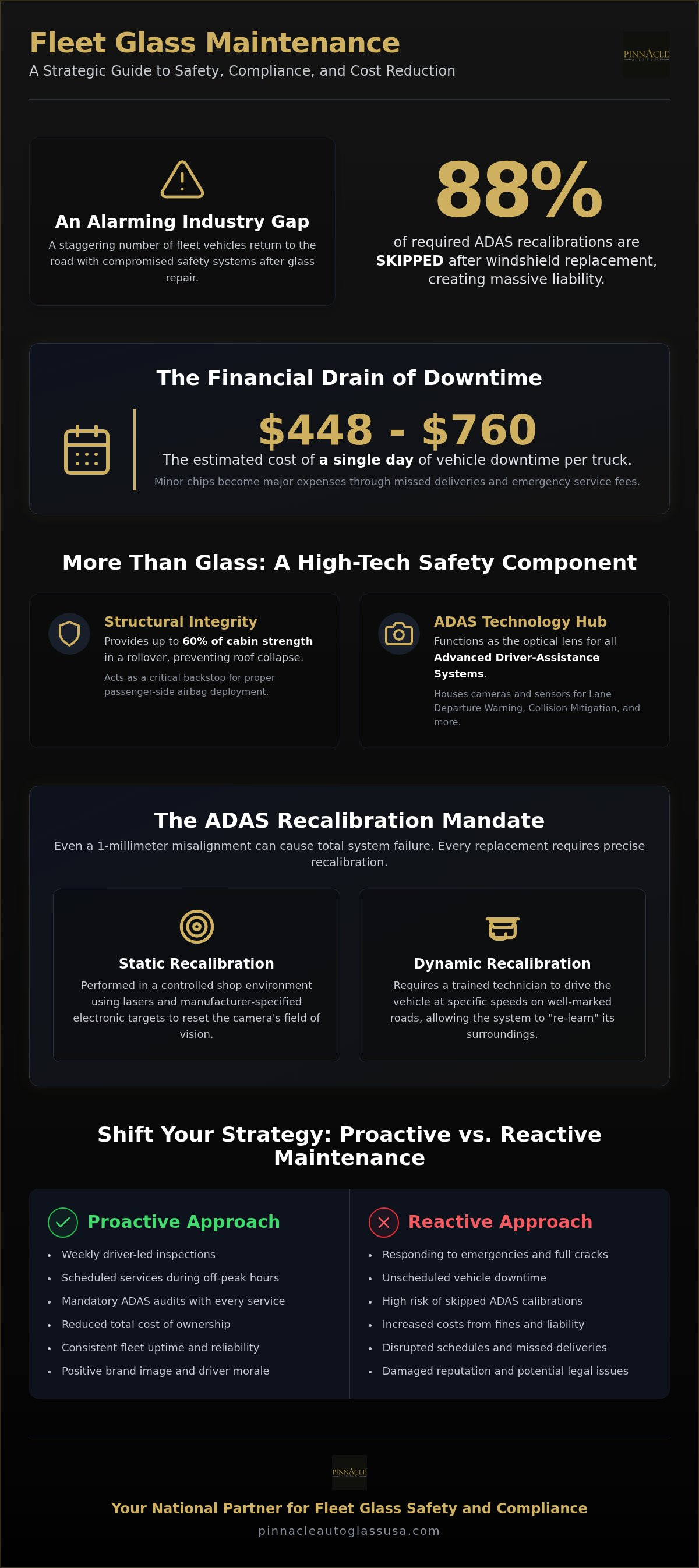
Did you know that an estimated 88% of required ADAS recalibrations are skipped after glass repairs? This statistic represents a significant liability for modern carriers. You already know that keeping your vehicles moving is the only way to protect your margins. However, managing commercial fleet glass maintenance across multiple regions often leads to inconsistent quality and unexpected safety risks. A single day of vehicle downtime can cost your fleet operation between $448 and $760; this makes every crack and chip a direct threat to your bottom line.
We understand the pressure to maintain a high Vehicle Maintenance BASIC score while controlling operational costs. This guide provides a strategic roadmap to help you reduce unscheduled downtime, ensure strict ADAS compliance, and lower your total cost of ownership. You'll learn how professional glass management simplifies complex technical tasks and keeps your drivers safe. We will cover essential FMCSA regulations, the necessity of certified recalibration, and the administrative benefits of a reliable national service partner.
Key Takeaways
- Understand why modern windshields are critical structural components and how proactive care protects your fleet's long-term margins.
- Learn to standardize your commercial fleet glass maintenance by integrating technology audits and mandatory ADAS recalibration into every service.
- Identify the hidden financial drains of reactive maintenance, such as lost revenue and avoidable emergency service fees.
- Establish a weekly driver-led inspection protocol to catch minor chips and stress cracks before they lead to full vehicle downtime.
- Discover the administrative advantages of a national partnership that simplifies complex glass repairs and safety system calibrations.
The Strategic Importance of Commercial Fleet Glass Maintenance
Modern Fleet management involves more than just tracking miles and fuel. It requires a technical approach to every vehicle component. Commercial fleet glass maintenance has evolved from a simple repair task into a critical safety protocol. In 2026, the windshield is a sophisticated housing for cameras and sensors that drive safety technology. Neglecting this component risks more than just a ticket; it compromises the entire vehicle's safety system. Implementing a consistent commercial fleet glass maintenance program allows you to schedule services during off-peak hours instead of reacting to emergencies.
Glass as a Structural Safety Asset
The windshield provides essential structural support that protects drivers during accidents. Research indicates that a windshield can contribute up to 60% of a cabin's structural strength during a rollover incident. It prevents the roof from collapsing on the occupants. Additionally, the windshield acts as a backstop for the passenger-side airbag. If the glass isn't properly bonded or is damaged, the airbag may fail to deploy toward the driver correctly. Modern vehicle frames rely on the windshield as a rigid structural member to maintain cabin integrity and safety.
Impact on Fleet Uptime and Reliability
Unscheduled downtime is a primary profit killer for logistics operations. A single day of vehicle downtime can cost between $448 and $760. A small rock chip can quickly escalate into a spiderweb crack due to road vibrations or extreme temperature shifts. Once a crack spreads, the vehicle is legally grounded. This leads to missed deliveries and administrative headaches. You can avoid these disruptions by prioritizing reducing fleet downtime with mobile glass repair. Proactive maintenance keeps your vehicles on the road and your revenue steady.
Professionalism matters for both your clients and your employees. Drivers are more likely to stay with a company that prioritizes their safety and keeps equipment in top condition. A cracked windshield projects an image of neglect to the public. It suggests that the carrier cuts corners on maintenance. Maintaining clear, undamaged glass ensures a professional brand image and reinforces a culture of safety within your team. This attention to detail reduces long-term operational costs by preventing expensive emergency replacements and liability issues.
Critical Components: Windshield Replacement and ADAS Recalibration
Every windshield replacement in a modern fleet must begin with a technology audit. You can't simply swap the glass and send the driver back on the road anymore. The glass acts as the optical lens for the vehicle's Advanced Driver Assistance Systems (ADAS). If a camera is misaligned by even a fraction of a millimeter, the safety systems won't function as intended. This technical precision is a core part of effective commercial fleet glass maintenance in 2026. Ignoring these details doesn't just risk a system error; it creates a massive liability gap for your company.
Understanding ADAS in a Commercial Context
Systems like Lane Departure Warning and Forward Collision Mitigation rely entirely on the clarity and positioning of the glass. Heavy-duty commercial trucks require extreme precision for camera alignment because of their larger blind spots and longer braking distances. There are two primary methods used to ensure these systems are accurate:
- Static Recalibration: This is performed in a controlled environment using specialized electronic targets and lasers to reset the camera's field of vision.
- Dynamic Recalibration: This requires a technician to drive the vehicle at specific speeds on well-marked roads to allow the system to "learn" its surroundings.
For a deeper dive into these technical requirements, see our ADAS calibration and auto glass reference guide. Skipping these services after a glass installation has serious legal and insurance implications. If a collision occurs and forensic evidence shows the sensors weren't calibrated, your insurance carrier may deny the claim, leaving your business exposed to significant financial loss.
The Windshield Replacement Process for Fleets
Durability is non-negotiable for logistics operations. We utilize glass that meets or exceeds OEM-equivalent standards to ensure it withstands the rigors of long-haul transport. Federal compliance with 49 CFR 393.60 is mandatory. This regulation dictates exactly where damage is permitted and where it isn't to ensure the driver's view remains unobstructed. If your fleet glass doesn't meet these standards, you risk heavy fines during DOT inspections.
Safety also depends on the adhesive curing time. Drivers shouldn't operate the vehicle until the high-grade urethane has fully bonded to the frame. This ensures the windshield stays in place during a rollover or airbag deployment. Our professional windshield replacement guide outlines these safety steps in detail. Professional commercial fleet glass maintenance requires certified technicians who understand these high-tech requirements. If you're looking to standardize your safety protocols, you can partner with Pinnacle Auto Glass for comprehensive fleet support.
Analyzing the Financial Impact on Fleet Total Cost of Ownership
Every fleet manager knows the sticker price of a windshield. However, the total cost of ownership (TCO) involves much more than the invoice for the glass itself. Reactive commercial fleet glass maintenance often triggers a chain reaction of hidden expenses. These include towing fees, driver overtime, and lost revenue from missed delivery windows. A single day of vehicle downtime can cost your operation between $448 and $760. When you add emergency service premiums, the cost of an ignored chip skyrockets. Standardizing your maintenance costs through a national partner simplifies your budgeting and eliminates regional price spikes.
Repair vs. Replacement: A Cost-Benefit Breakdown
Proactive care is the most effective way to control your TCO. Regular windshield repair acts as a primary defense against expensive full replacements. The 'repairable zone' is strictly defined by federal regulations. Generally, any single damage point must be coverable by a 3/4-inch diameter disc and must not be within 3 inches of other damage. Industry data shows that a professional repair typically costs about 10% of a full replacement. You can view a detailed breakdown of these variables in our windshield replacement cost guide. Catching damage within 48 hours is the key to keeping these costs low.
Risk Management and Liability Reduction
Safety incidents involving glass can cause commercial insurance premiums to spike. If an accident occurs and the vehicle has undocumented or substandard glass repairs, the carrier may face 'negligent maintenance' claims. These legal challenges are far more expensive than any maintenance protocol. Documented glass inspections assist in insurance claim approvals and protect your business from litigation. A national partner helps you maintain consistent safety records across all regions. This documentation provides proof of due diligence, which is vital for maintaining your safety rating and reducing liability. Consistent commercial fleet glass maintenance ensures that your safety technology functions as designed, preventing the collisions that drive up long-term insurance costs.
Implementing a Proactive Fleet Glass Inspection Protocol
A successful program for commercial fleet glass maintenance requires more than just calling for repairs when a windshield shatters. It demands a structured protocol that starts with the people behind the wheel. You should establish a weekly driver-led visual inspection routine to catch damage before it compromises vehicle safety. Training your logistics staff to identify 'stress cracks' is equally important. These cracks often start at the edge of the glass due to frame tension or improper installation and can spread across the entire windshield in hours. Integrating these checks into your existing vehicle telematics or maintenance software ensures that glass health is never overlooked during standard service intervals.
The Driver’s Daily Glass Checklist
Drivers are your first line of defense. They should perform a quick scan of the windshield every time they enter the cab. This checklist should focus on three critical areas:
- Critical Line of Sight: Check for any chips or pits in the area directly in front of the driver. Even small imperfections can cause glare or obscure hazards.
- Seal and Trim Integrity: Inspect the edges of the commercial truck glass for loose molding or signs of water intrusion. A failing seal can lead to wind noise and eventual glass failure.
- Sensor Obstructions: Ensure the area around the rearview mirror is clear of dirt, ice, or stickers. These obstructions can trigger ADAS errors and disable safety features like lane-keeping assist.
If a chip is larger than a quarter or located in the driver's direct field of vision, you must pull the vehicle from service immediately. This prevents a minor issue from turning into a major safety violation during a roadside inspection.
Managerial Oversight and Documentation
Documentation is your best protection against liability. You need a centralized digital record for all glass repairs and calibrations to ensure every vehicle meets safety standards. This record should be easily accessible during DOT audits or insurance reviews. You should also audit your service providers regularly. Confirm that they use certified technicians and follow OEM-equivalent installation procedures. For every ADAS recalibration, maintain a digital log that includes the technician's signature, the specific calibration method used, and the successful system validation report.
Standardizing these processes across your entire operation reduces the administrative burden on your local managers. It also ensures that a vehicle in one region receives the same high level of care as a vehicle in another. If you need a partner to help manage these protocols, you can schedule professional fleet glass services to keep your documentation and safety systems up to date. This proactive approach turns maintenance from a headache into a predictable part of your business strategy.
Strategic Fleet Solutions with Pinnacle Auto Glass
Pinnacle Auto Glass serves as a strategic national partner for logistics and service fleets across the country. We don't just fix glass; we manage the technical lifecycle of your vehicle's safety systems. Our approach to commercial fleet glass maintenance integrates high-quality glass installation with mandatory ADAS recalibration. This combined service model eliminates the need for secondary appointments at dealerships, which significantly reduces your administrative burden. We provide professional mobile services designed to meet your vehicles at depots, job sites, or distribution centers. This flexibility ensures that your drivers stay productive while we handle the technical details.
National Reach with Professional Precision
Maintaining a consistent standard of care is difficult when your fleet operates across multiple regions. We solve this by providing a unified service experience that ensures every vehicle receives the same high-quality treatment. The role of certified auto glass technicians is critical for your fleet's reliability. These experts understand the nuances of commercial truck glass and the specific calibration requirements for heavy-duty sensors. By positioning Pinnacle Auto Glass as your primary choice for complex fleet needs, you gain a partner that prioritizes safety and technical accuracy above all else.
Simplified Commercial Account Management
We provide dedicated support for fleet managers who need to handle high-volume glass needs without the typical paperwork hurdles. Our streamlined billing and insurance handling processes are designed specifically for commercial account managers. We offer customized service plans tailored to the unique requirements of your vehicles:
- Delivery Vans: Rapid response for high-frequency stop-and-go vehicles.
- Box Trucks: Durable glass solutions for regional distribution fleets.
- Semi-Trucks: Technical expertise for long-haul tractors with advanced safety suites.
Our goal is to simplify commercial fleet glass maintenance so you can focus on your core logistics operations. We act as a seasoned guide, helping you navigate the complexities of modern automotive technology while keeping your operational costs predictable. Our organized approach ensures that every repair and calibration is documented for your safety audits and insurance records. Contact Pinnacle Auto Glass today to establish a customized fleet maintenance program that prioritizes your safety and efficiency.
Secure Your Fleet's Future with Strategic Glass Management
Modern fleet management requires a shift from reactive repairs to a proactive safety strategy. You've seen how a single cracked windshield can ground a vehicle and lead to hundreds of dollars in daily lost revenue. By prioritizing ADAS compliance and routine inspections, you protect your drivers and your bottom line. Proper commercial fleet glass maintenance is a technical necessity that ensures your safety sensors function exactly as the manufacturer intended. This approach transforms a maintenance headache into a predictable part of your business growth.
You don't have to manage these complex requirements alone. Our team provides the national service coverage and certified glass technicians needed to keep your operations running smoothly across the country. We include professional ADAS recalibration with our installations to ensure every vehicle meets the highest safety standards. Streamline your fleet glass maintenance with Pinnacle Auto Glass and gain the peace of mind that comes with expert care. Take control of your maintenance schedule today and keep your fleet moving forward.
Frequently Asked Questions
What is included in a professional commercial fleet glass maintenance program?
A comprehensive program includes windshield repair for minor chips, full windshield replacement when damage exceeds repairable limits, and mandatory ADAS recalibration. We also provide routine inspections to catch stress cracks early. This structured approach to commercial fleet glass maintenance ensures your vehicles stay compliant with FMCSA standards. Our technicians focus on high-quality materials and technical precision to maximize the lifespan of your fleet's glass assets.
Why is ADAS recalibration mandatory after fleet windshield replacement?
ADAS recalibration is mandatory because safety sensors like cameras and radar are often mounted directly to the windshield. Even a slight shift during replacement can misalign these systems. This leads to errors in lane departure warnings or automatic emergency braking. Proper calibration ensures these life-saving technologies function correctly. Skipping this step creates significant liability risks and could lead to insurance claim denials if a collision occurs.
How can proactive glass repair reduce my fleet's total operating costs?
Proactive repair stops small chips from spreading into large cracks that require a full replacement. A professional repair is significantly cheaper than a new windshield and takes less time. This strategy directly reduces vehicle downtime, which costs fleets between $448 and $760 per day. Catching damage early also helps you avoid expensive DOT fines and prevents unscheduled disruptions to your delivery routes.
What types of commercial vehicles does Pinnacle Auto Glass service?
We provide specialized glass services for a wide range of logistics and service vehicles. This includes heavy-duty semi-trucks, medium-duty box trucks, and high-frequency delivery vans. Our technicians are trained to handle the unique structural requirements of commercial truck glass. Whether you manage a small local delivery team or a large national logistics network, we have the expertise to maintain your entire fleet.
Can fleet glass repairs be performed via mobile service at our depot?
Yes, we offer professional mobile services designed to meet your vehicles at depots, job sites, or distribution centers. This eliminates the need for your drivers to transport vehicles to a shop, which saves valuable time. Our mobile units are equipped to handle both windshield replacement and ADAS recalibration on-site. This flexibility is a core component of an efficient commercial fleet glass maintenance strategy.
How do I manage glass insurance claims for multiple fleet vehicles?
We simplify insurance management through dedicated commercial account support. Our team handles the streamlined billing and documentation required for high-volume glass needs. We work directly with your insurance providers to process claims for multiple vehicles simultaneously. This reduces the administrative burden on your fleet managers. We maintain centralized digital records of all repairs and calibrations to ensure your safety audits are always accurate.
What happens if a fleet vehicle is driven with a cracked windshield?
Driving with a cracked windshield is a violation of 49 CFR 393.60 and can lead to immediate safety citations. The windshield provides up to 60% of the cabin's structural strength during a rollover. A crack compromises this integrity and can interfere with proper airbag deployment. Additionally, non-compliance with FMCSA regulations in 2026 can result in fines of up to $16,000 per violation, depending on the severity.
How long does a typical commercial truck windshield replacement take?
A standard windshield replacement usually takes between one and two hours. However, you must also account for the adhesive curing time and ADAS recalibration. The vehicle typically needs to remain stationary for at least one hour after installation to ensure a safe bond. If static or dynamic recalibration is required, the total service time may extend to three or four hours. We prioritize efficiency to get your drivers back on the road.


